
While tabling the mid-year review of the 12th Malaysia Plan, Malaysia Prime Minister Anwar Ibrahim had also announced that Malaysia will be developing a policy to ban rare earth exports. This move is wide-sweeping and will be mandated to all rare earth and related raw materials.
This is to ensure Malaysia can study and develop a new economic driver that will boost the country’s growth. For Anwar, this move is necessary as demand for rare earth has skyrocketed recently thanks to growing demands from the electronics sectors.
According to data from the US Geological Survey from 2019, Malaysia only has 30,000 tonnes of rare earth reserves and that has likely dwindled due to excessive mining. Creating a policy that bans the export of rare earth for Malaysia can’t come any sooner as the remaining reserves are expected to contribute as much as RM9.5 billion (~USD2.02 billion) to Malaysia’s gross domestic product in 2025.
The ban will address illegal mining of rare earth materials around designated areas that have been zoned for the private sector to conduct rare earth extraction. Notably, there is no timeline on when the policy — presumably named a the National Mineral Policy — will be mandated and come into effect.
More importantly, with joblessness on the rise in Malaysia, the new sector will create at least another 7,000 job opportunities.
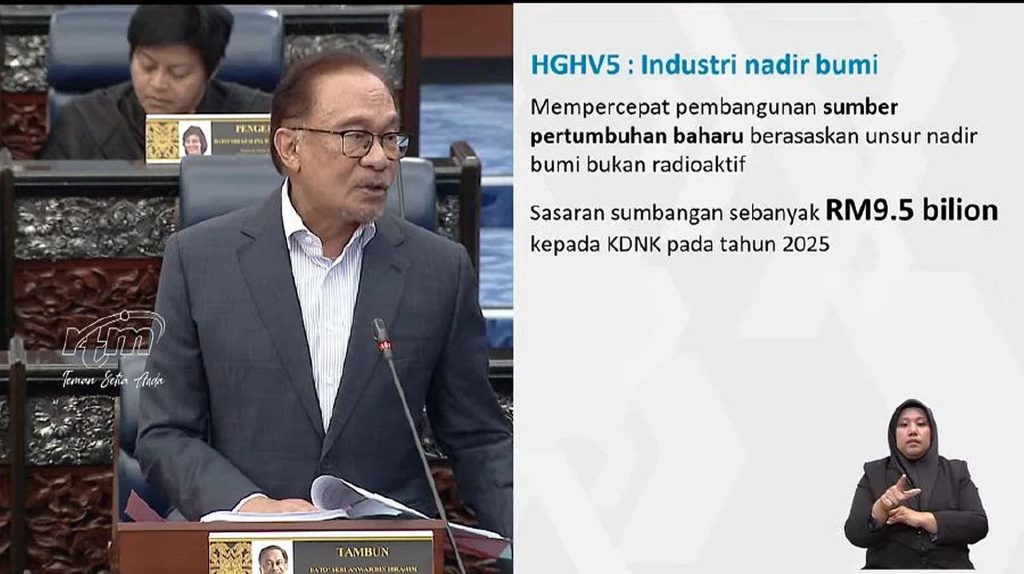
Anwar said the ban and development of this new market will look at maximising returns for Malaysia.
“Detailed mapping of rare earth element sources and a comprehensive business model that combines upstream, mid-stream, and downstream sectors will be (included in the) development. This will ensure Malaysia has a strong supply value chain in place,” he added.