
As the concept of Environmental, Social, and Corporate Governance (ESG) continue to gain momentum, there is a now a greater need to learn, understand, and adopt these best practices among businesses. This goes without saying even for small- and medium-sized enterprises (SMEs).
The SME Association of Malaysia (SME Association), in anticipation of the upcoming Budget 2024 reading, shared its hope that there would be an allocation to support SMEs with adopting ESG practices.
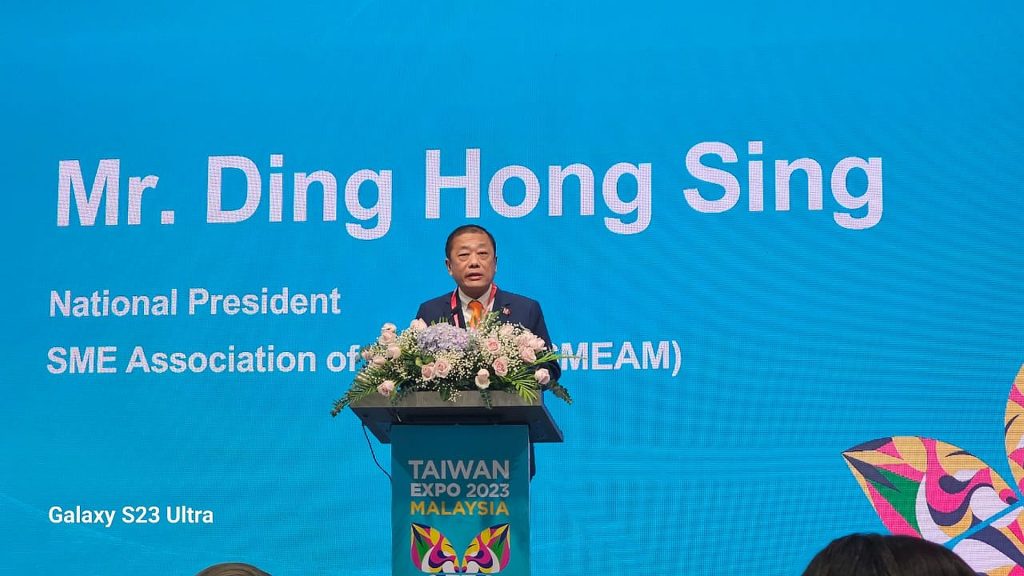
“With the recent launch of the Industry ESG Framework (iESG), (we) hope the government can assist SMEs to (learn,) understand, (and adopt) ESG,” said Ding Hong Sing, National President, SME Association.
Since support for SMEs can come in any form, Ding had been very specific with the allocation — a one-to-one matching grant for SMEs of RM2 billion (~USD424 million), the continuation of automation and digitalisation-related grants, and increased funding for the Market Development Grant (MDG).
The last two SMEs support platforms, which have been running for some years now, are under the respective purview of the Malaysia Digital Economy Corporation (MDEC) and the Malaysia External Trade Development Corporation (MATRADE).
Similar calls for support also came from Small and Medium Enterprises Association of Malaysia (SAMENTA). Reinforcing the recent request that it made for some start-up funds to be diverted to SMEs, its National President, William Ng, shared how it is critical for SMEs to be independent of funding grants and financial assistance. This is to ensure that publicly managed support can reach as many SMEs as possible.
For Ng, it is all about narrowing the financing gap for SMEs. With highly competitive businesses, the RM 2 billion low-interest loans that SME Association suggested is a good start, though SAMENTA suggested that there should be a limit of RM1 million per eligible company to assist with the transition to low-carbon operations. This includes purchasing new machinery, plant upgrades, consulting fees, training, and certification costs.
As for direct support to SMEs, loan guarantees up to RM10 billion (~USD 2.12 billion) can be considered with the guarantee costs capped at 0.5% for eligible SMEs. This will be for the purpose of operational upgrades and working capital under Budget 2024.
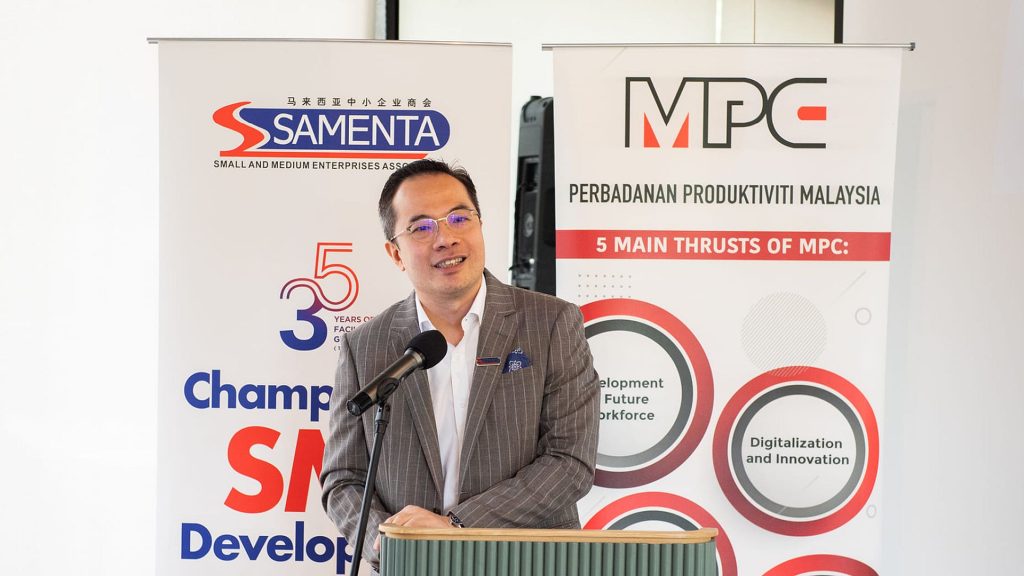
Ng noted how government support must eventually move to matching grants for research and development efforts, fund programmes that boost SME performance in the value chain, and even consider joint-financing to developed the skill-sets of current and new talents joining the workforce.
“SMEs have to move on from direct grants, low-interest loans, and financing guarantees to eliminate grant-leakages and (curtail the growth of) ‘grant-preneurs’. We suggest that there is mandatory registration of all businesses with the Companies Commission of Malaysia and relevant agencies, including MATRADE and SME Corportaiton (SMECorp), to ensure assistance to SMEs are disbursed based on data and suitability,” he said.
For both Ding and Ng, Budget 2024 must focus on empowering SMEs to be self-sustainable and have the ability to develop and implement ESG practices across their business operations.