
As the world still grapples with a looming recession, see mixed results in mitigating and addressing downturn pressures, and continue to see chatter about market performance from as far back as early 2023, Malaysia’s domestic performance remained strong.
Malaysia’s National Bank (Bank Negara Malaysia — BNM), during its latest press engagement to share about Malaysia’s mid-year financial performance, shared how local businesses continued to show improvement for their respective financial performances.
“Despite the ongoing challenges (at local, regional, and global levels,) domestic business activities have improved considerably,” the banking authority stated in its findings. These positive domestic market conditions, which BNM called “orderly”, are reflective of Malaysia’s financial stability as well.
For BNM, these market and financial strengths include:
- Deep and liquid domestic capital markets
- Active market risk management and hedging strategies
- Domestic institutional investors that are resilient
- Manageable financial exchange exposure that is paired with strong buffers
“(These factors, especiallly,) the liquidity and strong buffers will continue to ensure the financial system’s resilience against future shocks and unexpected losses. This will enable them to continue their support of the financing and protection needs of households and businesses,” said BNM.
Even with these reported resiliencies, BNM had also cautioned that current business challenges will still be present and persistent. This includes higher cost of living, weak consumer demand, and unpredictable conditions of the global financial markets.
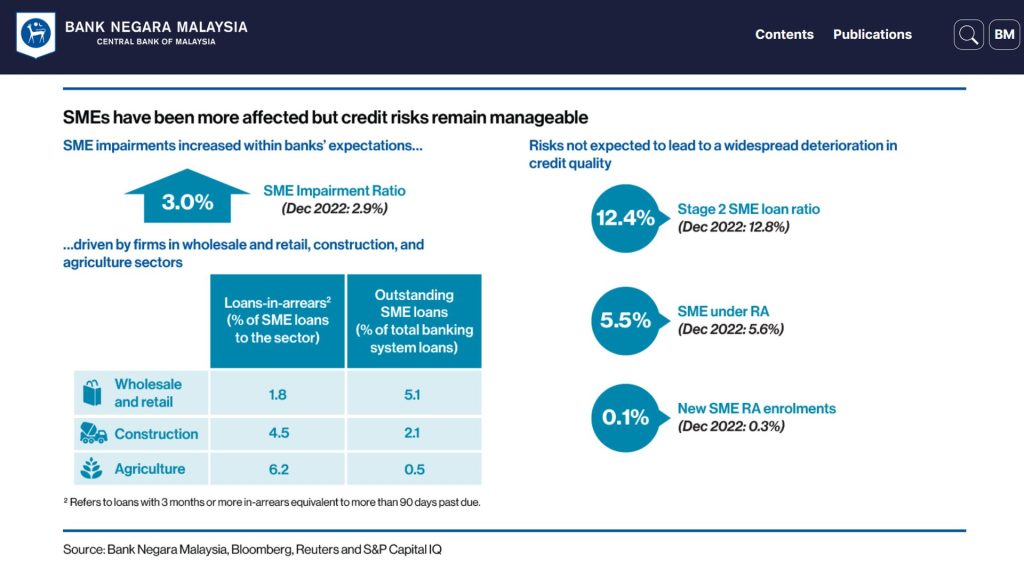
On small- and medium-sized enterprises (SMEs), BNM noted how the global markets have impacted them — primarily not being able to properly finance their loans. Even so, BNM believes their credit risk levels will not become bad as they’re still manageable. Likewise, household debt-servicing is on the decline as well as increased employment and steady wage growth for the Malaysian workforce ensured debt controls are stable.
BNM also shared how financial institutions are also making progress in aligning their business operations with environmental and sustainability goals. As is, financial institutions are already adopting sustainable investment and lending practices; expanding into green-focused financial solutions; and considering climate risk management functions.
It remains to be seen if Malaysia will stay the course, but — going by the statistics from BNM — there is some certainty that Malaysia can manage these ongoing and incoming economic turbulences. It helps that there is more focus on domestic investments as well.
The entire 2023 Financial Stability Review for Malaysia from BNM can be found here.